

However, the current and noncurrent assets categories also include “marketable securities” categories. These contain things such as Treasury securities, bond investments, and stocks. Sandra Habiger is a Chartered Professional Accountant with a Bachelor’s Degree in Business Administration from the University of Washington. Sandra’s areas of focus include advising real estate agents, brokers, and investors. She supports small businesses in growing to their first six figures and beyond.
Do I need to come to campus to participate in HBS Online programs?
A balance sheet, along with the income and cash flow statement, is an important tool for investors to gain insight into a company and its operations. It is a snapshot at a single point in time of the company’s accounts, covering its assets, liabilities, and shareholders’ equity. Because the balance sheet reflects every transaction since your company started, it reveals your business’s overall financial health. At a glance, you’ll know exactly how much money you’ve put in, or how much debt you’ve accumulated. Or you might compare current assets to current liabilities to make sure you’re able to meet upcoming payments. A balance sheet is one of the financial statements of a business that shows its financial position.
Shareholders’ equity

These seemingly dull pages Accounting Security often contain crucial details that can significantly impact your understanding of the company’s financials. A bakery reviews its income statement and notices a steady increase in revenue year over year, reflecting strong customer demand. However, they also see a rise in expenses, particularly for ingredients like flour and butter due to inflation. By analyzing these components, you can gain valuable insights into a company’s profitability, its operational efficiency, and its overall financial health. For new companies, a higher debt-to-equity ratio may be common if it’s relying on a bank loan or other financing to get the business up and running. And more established companies may need debt to purchase new equipment or buy a bigger warehouse.
How to Read the Balance Sheet for Financial Reporting
Financial ratio analysis uses formulas to gain insight into a company and its operations. For a balance sheet, using financial ratios (like the debt-to-equity (D/E) ratio) can provide a good sense of the company’s financial condition, along with its operational balance sheet for dummies efficiency. Looking at the accounting equation, you can see why the statement of financial condition is called the balance sheet; the equal sign means the two sides balance.
Assets
A balance sheet provides a summary of a business at a given point in time. It’s a snapshot of a company’s financial position, as broken down into assets, liabilities, and equity. Balance sheets serve two very different purposes depending on the audience reviewing unearned revenue them. In external financial reports (those released outside the business to its lenders and investors), a balance sheet is required at the close of business on the last day of the income statement period. If its annual or quarterly income statement ends, say, September 30; then the business reports its balance sheet at the close of business on September 30. To read a balance sheet, you need to analyze your business’s assets, liabilities, and equity to get a clear picture of what your company owns and owes.

It is also a valuable tool for management to know the value of assets a business owns, including equipment, bank balance and what it owes at any given time. A company can use its balance sheet to craft internal decisions, though the information presented is usually not as helpful as an income statement. A company may look at its balance sheet to measure risk, make sure it has enough cash on hand, and evaluate how it wants to raise more capital (through debt or equity). In this example, Apple’s total assets of $323.8 billion is segregated towards the top of the report.
How to Read Financial Statements Conclusion
- The report is used by business owners, investors, creditors and shareholders.
- Where to secure capital is really a business financial management question, not an accounting question per se.
- It reveals how much cash a company has on hand, how much it owes to creditors, and the value of its investments.
- If they don’t balance, there may be some problems, including incorrect or misplaced data, inventory or exchange rate errors, or miscalculations.
- It also has a smaller amount of short-term debt plus about $63 billion in accounts payable (e.g., to its part suppliers).
- It’s very difficult to generalize about the cost of fixed assets relative to annual sales revenue.
- These tips can help you make the necessary adjustments to your business’s net income, eye two different profit analysis models, and communicate the reports to your managers.
This is the money earned from the business’s primary activities, such as selling goods or providing services. It’s often presented at the top of the income statement, hence the phrase “top-line” revenue. These are assets that can be converted into cash within one year, such as cash itself, accounts receivable, and inventory. Financial Statements contain summarised data describing an organisation’s financial activities, such as income, expenses, assets, liabilities, net worth, etc.

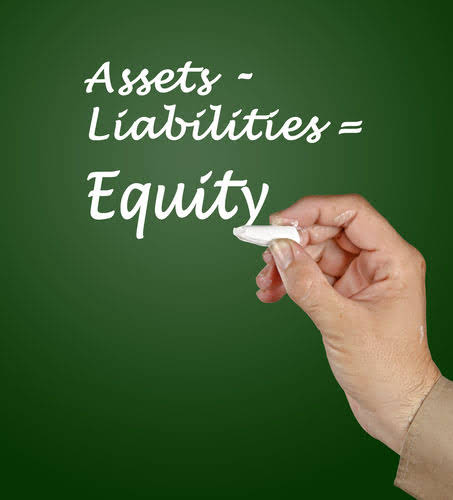
Assets = Liabilities + Shareholders’ Equity
These accounts and numbers come from a company’s trial balance worksheet, the details of which are drawn from the final adjusted trial balance. Noncurrent assets include things that won’t be readily spendable within the next year. However, they also include equipment, long-term investments, and intellectual property. With a firm understanding of the balance sheet basics, you can use this report to guide financial decision-making in your business. Although it takes time and effort to create an accurate balance sheet from scratch, it is a vital report you as a business owner should have. Accounting systems or depreciation methods may allow managers to adjust numbers on the balance sheet.